Before America gained independence, it's soldiers fought for England in the French and Indian War and many of the same people also fought in the Revolutionary War.The Continental Congress in 1775 created the Continental Army and named General George Washington its commander. The new Constitution in 1788 made the president the commander in chief. The military consisted of a regular army, state and town militias, and a modest navy. John Adams was president after Washington and built up the small, but efficient navy. The power of the U.S. Navy was shown under Jefferson when he used it to end the Barbary wars. One of he largest military action in America during the period was the War of 1812. The War of 1812 was the first time the U.S. declared war on another country even though the militaries previous goal was to remain completely neural to the European powers. The regular army and the militia did an outstanding job at the battle of New Orleans, killing over 2000 British and only losing 71. The U.S. Navy also performed well against the British Navy, which was considered one of the most powerful navies. After the war of 1812, the U.S. military focused on expanding the borders of America to the edge of the continent, this was a part of manifest destiny. The United States Army which was well equipped with the newest cannons, muskets, carbines, and the some of the best trained soldiers and generals of the time, fresh from the new military academy: WestPoint.
Friday, February 5, 2010

Tuesday, February 2, 2010
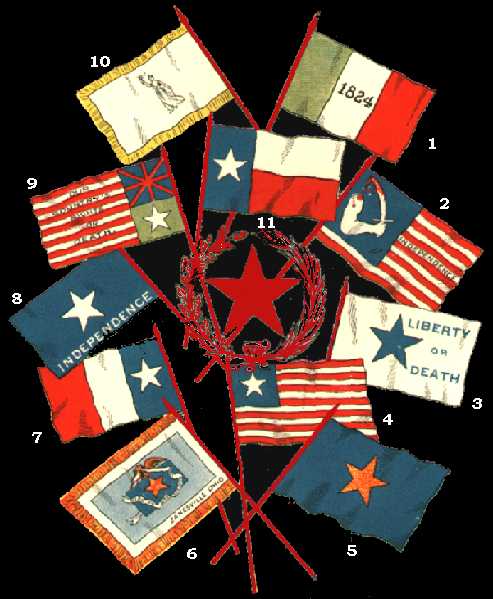
Texas Revolution
Wednesday, January 13, 2010
Westward Expansion

Wednesday, January 6, 2010
The Alamo
Subtopics
The Alamo
Manifest Destiny
Weapon Technology
Grant
Taylor
Westward Expansion
Indian Tribes of the Time
Mexican Empire
Treaties
U.S. Military History
Robert E. Lee
Monday, January 4, 2010
Manifest Destiny

According to William E. Weeks, manifest destiny contains three key features: that it is the virtue of the American people and their institutions, the mission to spread these institutions and remake the world in the image of America, and that all this was God’s destiny for America to fulfill this work. Today, this idea seems radical to many but almost all of our founding fathers and the key figures in shaping America supported this idea. Thomas Paine wrote about it in his Common Sense pamphlet, Abraham Lincoln even said that the U.S. was “the last, best hope of Earth.” The Whigs were opposed to this ideology but one of their major supporters, Thomas Jefferson, even believed that republics would be founded in North America to create an empire for liberty. Though many agreed on the idea of spreading freedom, the major split was on whether these new states would allow slavery or not. This issue made John Adams, an advocate for manifest destiny, switch sides due to the slavery policies of the new states. Manifest destiny required territory expansion, this happened westward rather than North or South. The United States established a border with Canada in the Treaty of 1818 and warned Europe in the Monroe Doctrine of 1823 that North America was no longer open for European colonization. These precautions were mostly geared towards the Mexicans and Indians but fear of British Expansion from Canada was ever growing. Canada began having small rebellions and the U.S. supported them and some people even volunteered to help liberate Canada from the British and establish a Republic in what was called the Patriot War. The U.S. arrested these volunteers in order to prevent war with Canada. Another heated topic was whether to split Oregon with the British or not but a majority of the American people would rather fight Britain for Oregon than divide it. Eventually this lead to the annexation of the Republic of Texas into the Union and sparked the Mexican American War in which America claimed a vast amount of territory around Mexico.
Weapons of the Mexican American War

During the Mexican American War, the U.S. soldiers were much better equipped and trained than their enemies. The standard issue rifle for the U.S. infantryman was the .69-caliber, smoothbore flintlock musket. This was accurate up to one hundred yards and there were ten different variations of this kind of musket.. While percussion muskets were more advanced at the time only a few soldiers carried the percussion “Mississippi rifle.” Standard sidearms were flintlock or percussion smoothbore pistols that were inaccurate beyond 10 to 15 yards. Many officers purchased their own Colt revolvers. These revolvers could shoot six rounds before reloading and could shoot all six rounds, and reload in the same time that a standard flintlock or percussion pistol of the time could fire and reload one round. All soldiers carried bayonets for close quarters combat but swords and bowie knives were used too. Officers also carried double-barreled shotguns. The U.S. cavalry was equipped with short-range breach loading carbines. The United States most distinct advantage was its Flying Artillery. The cannons, howitzers, and mortars were top notch and could fire quickly and accurately wherever they were needed. It was noted that the artillery could fire every ten to fifteen seconds. Mexico had no way to make its own arms so it purchased all its weapons from European arms dealers. Most of Mexico’s weapons were outdated British rifles and cannons. The Infantry used the British .753-caliber “Brown Bess” which were used during the Revolutionary War. The sharpshooters and those proven in combat were given more expensive and better quality rifles. After being defeated, it was recorded that many of the Mexican soldiers just threw away their weapons in a hasty retreat and the U.S. soldiers commented that in efficiency, every three Mexican muskets were equal to one U.S. musket and that all of the muskets had a British Tower seal on them. In close quarters combat, the Mexicans had shorter bayonets and sabers. Often times, the ammunition would not fit in the muskets correctly and the poor powder quality caused them to use more resulting in a higher kickback. The Mexican Cavalry was quite experienced with lances. The lances had an eight-inch blade with four sides and at the end was a flag used to frighten the horses. The lances were as deadly as they were intimidating. The Mexican Cavalry was the most revered position in the Mexican Army. The Mexican artillery could not fire explosive shells or canisters, used to take out large amounts of infantry, they could only fire solid cannonballs and their main goal was to take out opposing artillery rather than to punch holes in the infantry. Near the end of the war, the cannons were being forged by local blacksmiths and drawn by mule or civilian carts. These homemade cannons often failed to fire to their maximum range. Due to superior training, weaponry, and tactics of the United States Army, a victory seemed imminent for America but Mexico was able to at least use its cavalry to slow the American advancement.